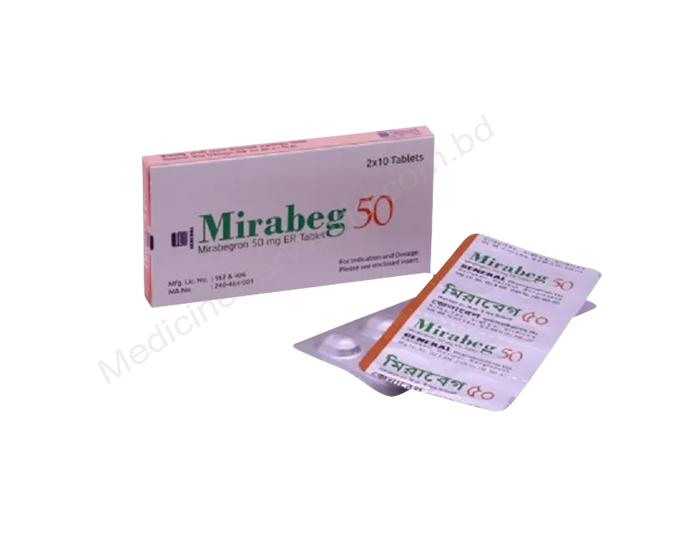
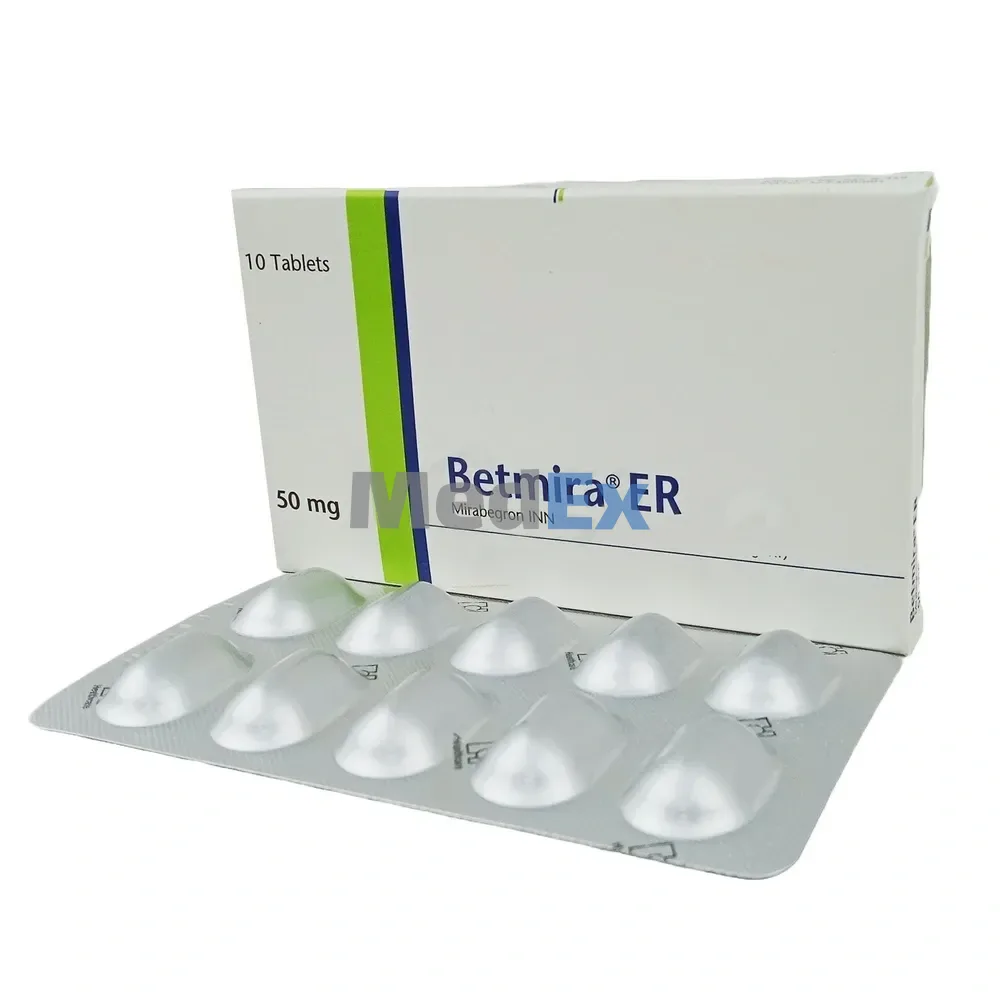
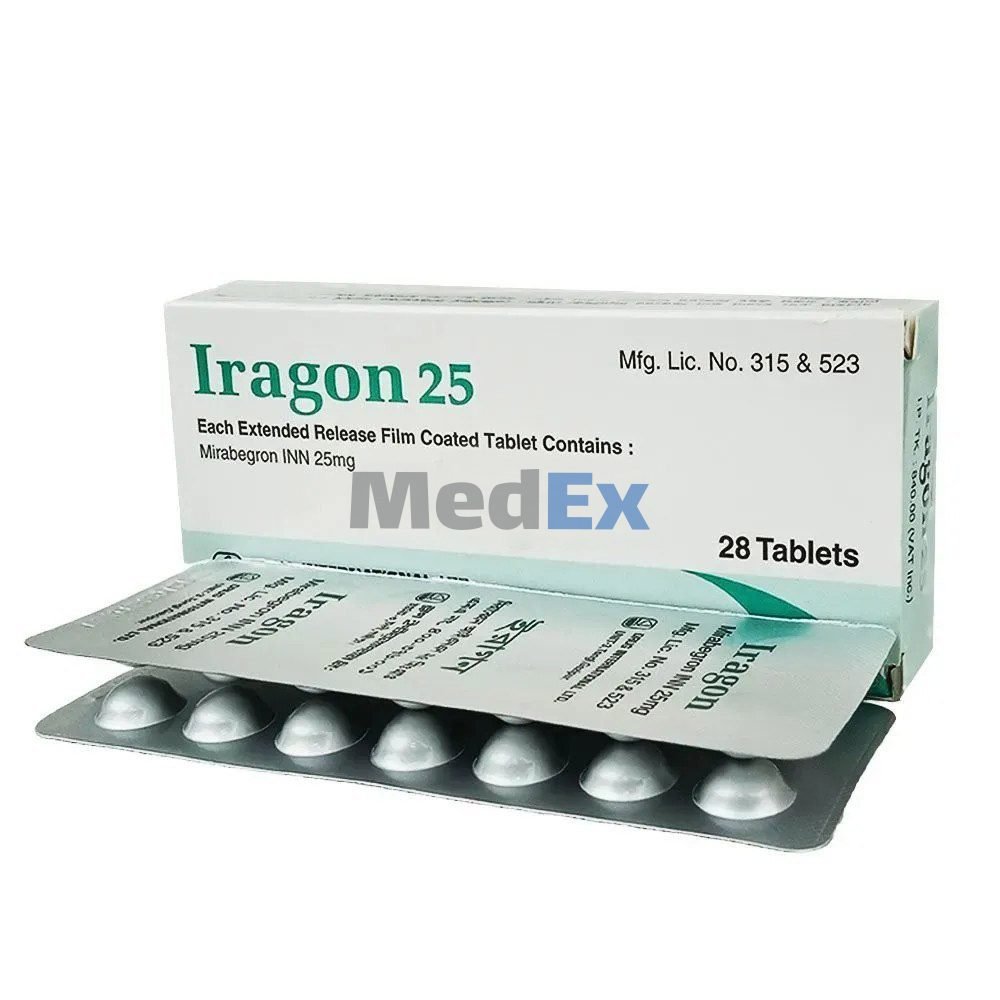
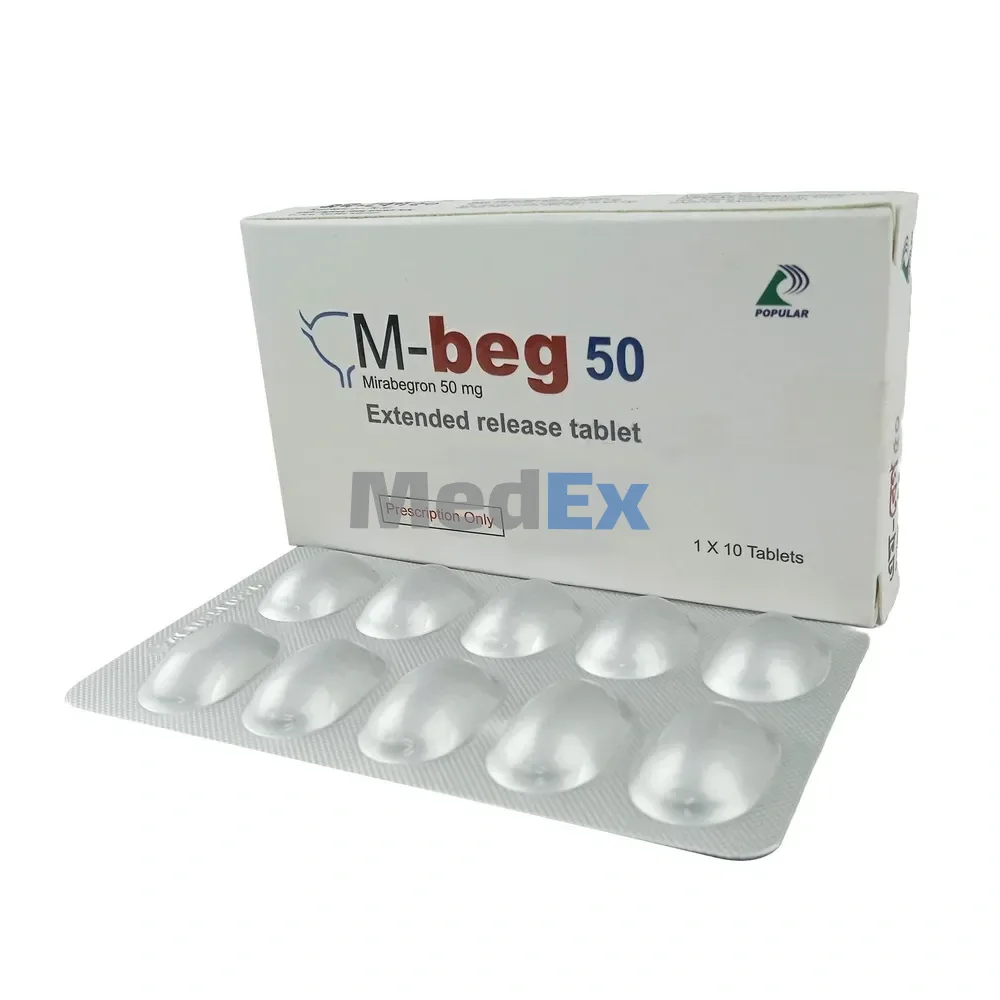
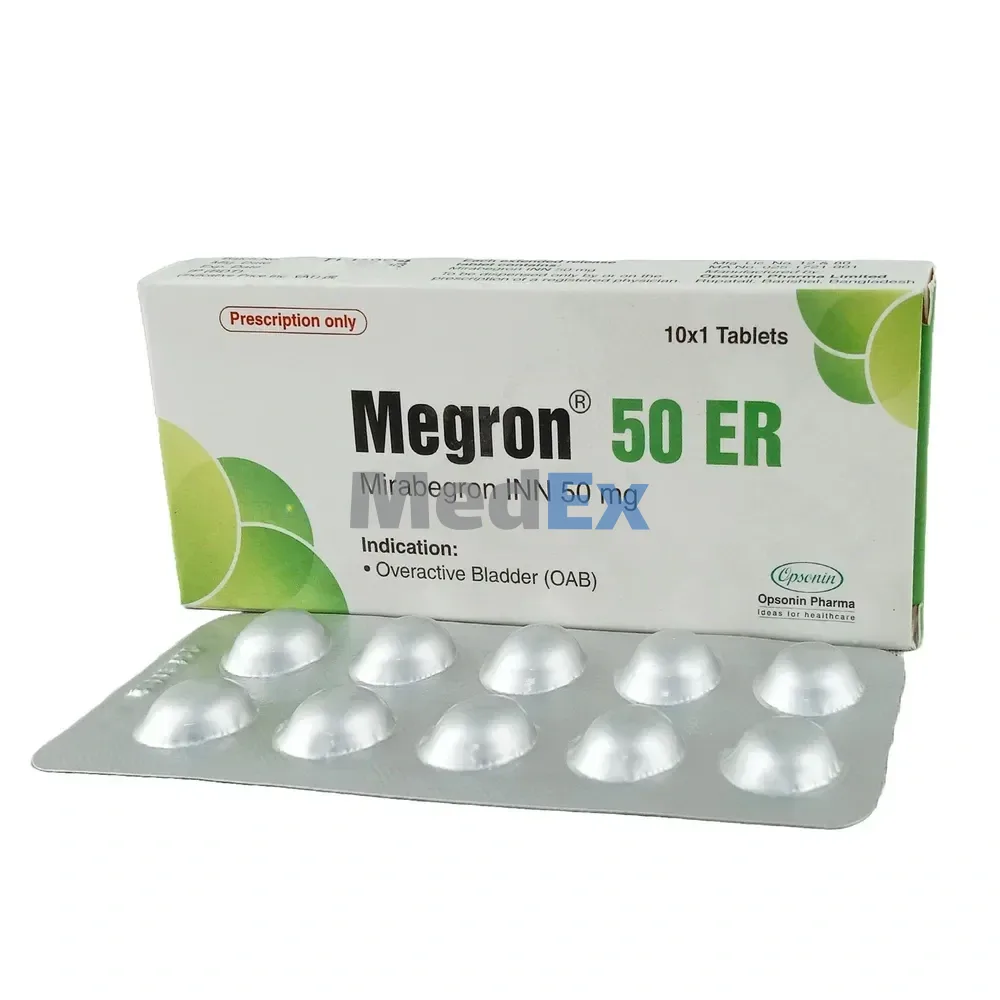
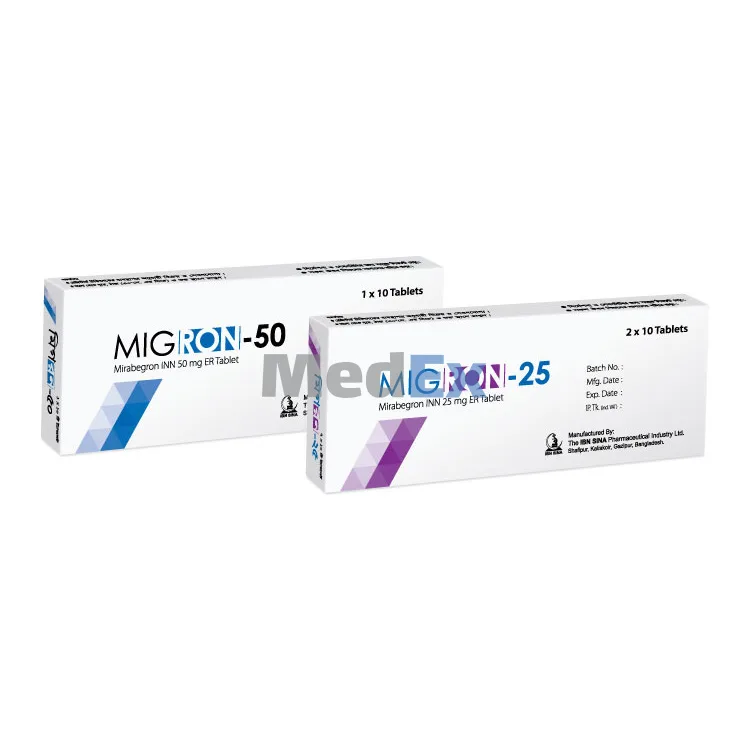
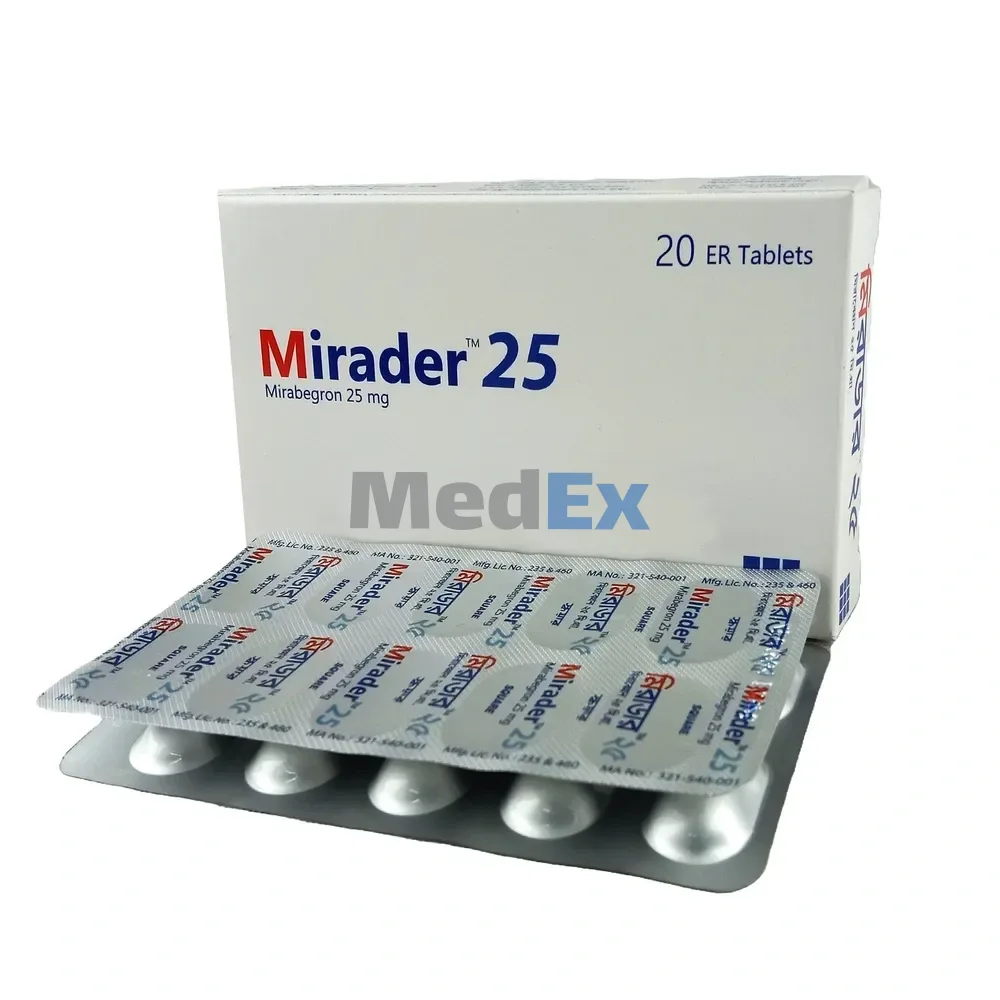
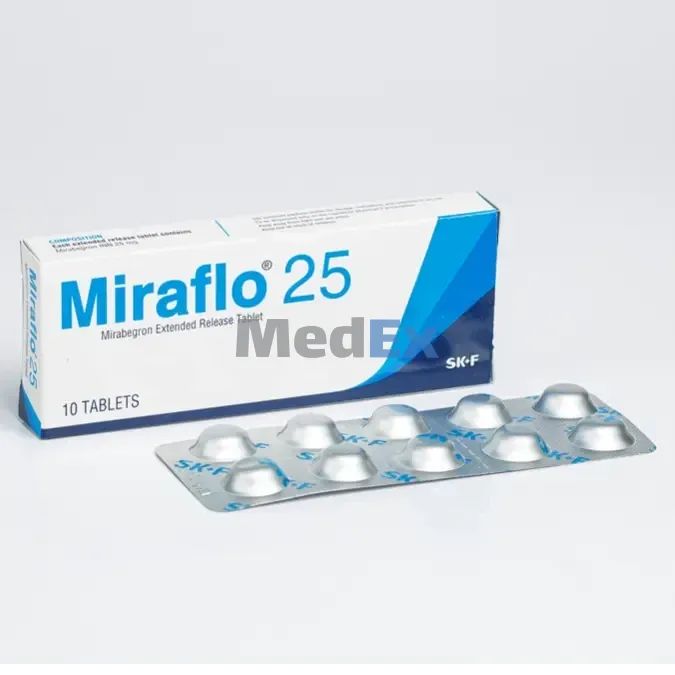
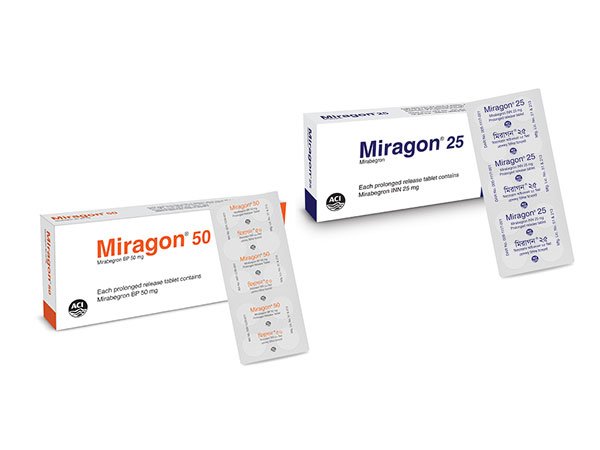
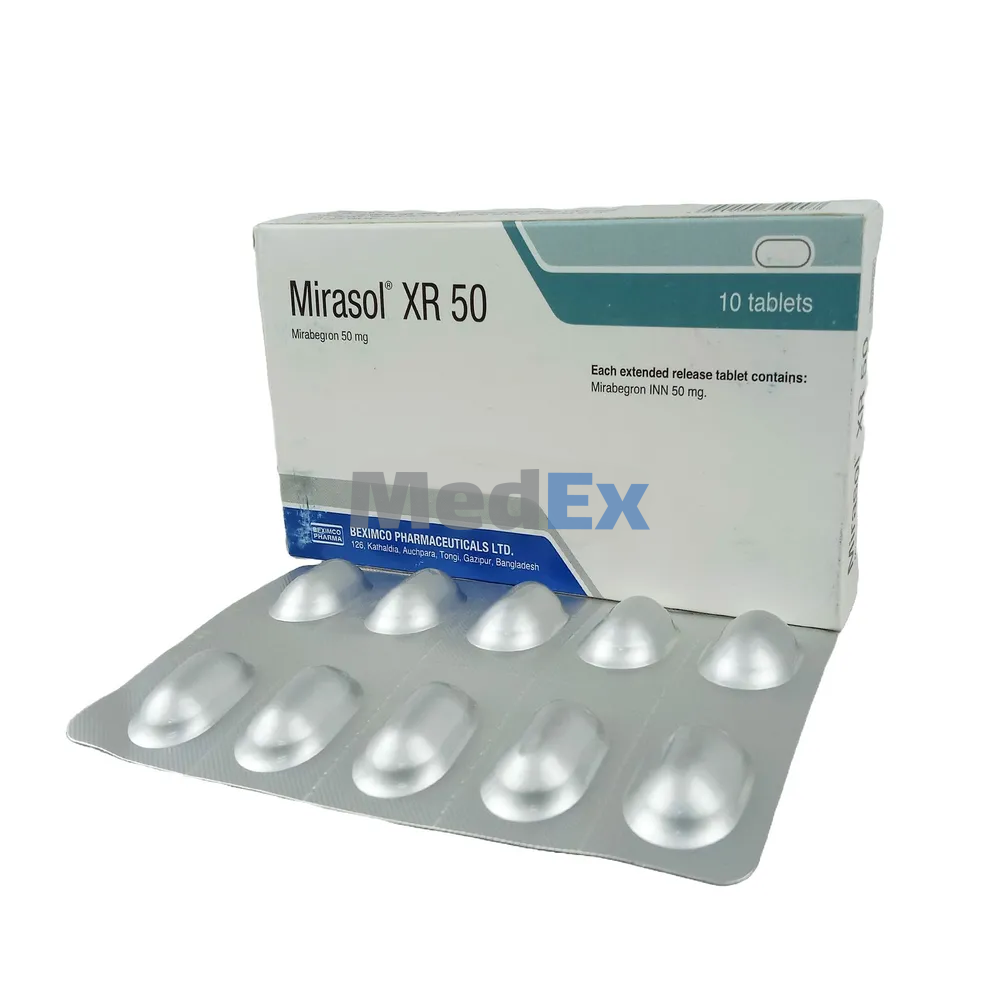
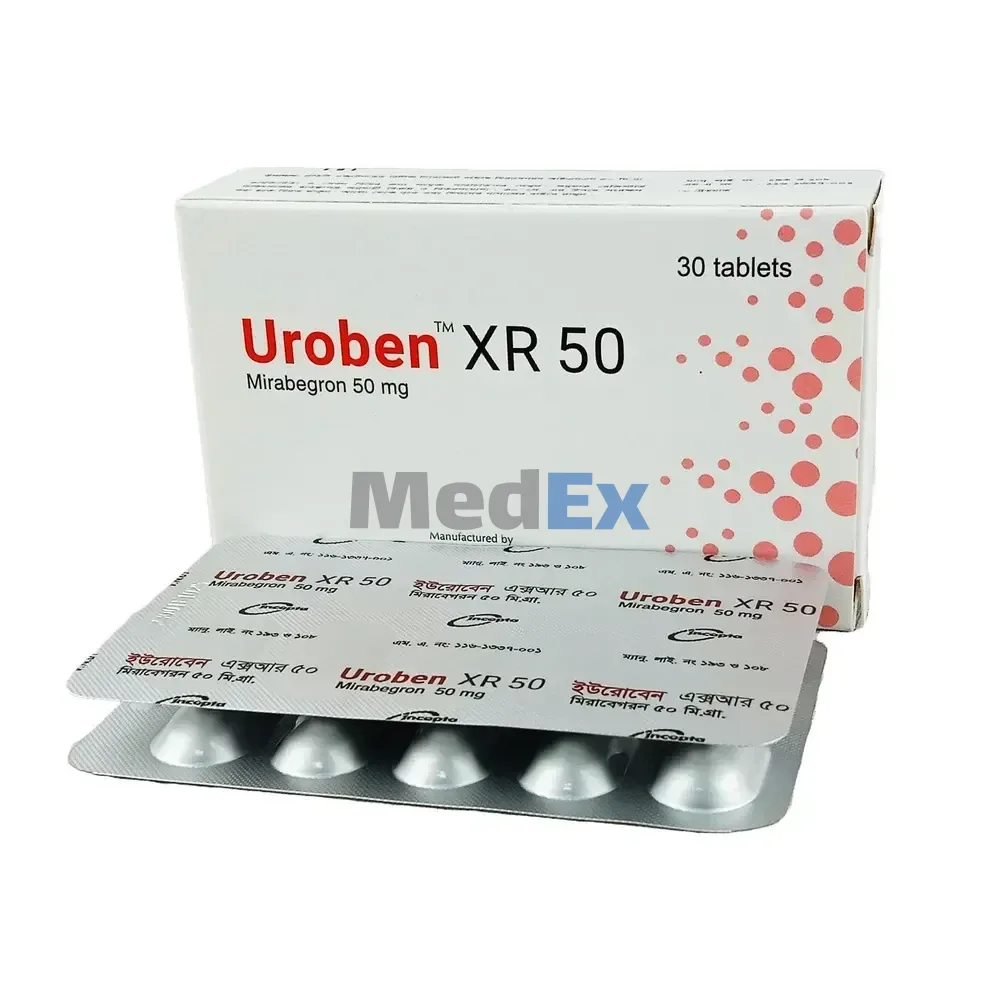
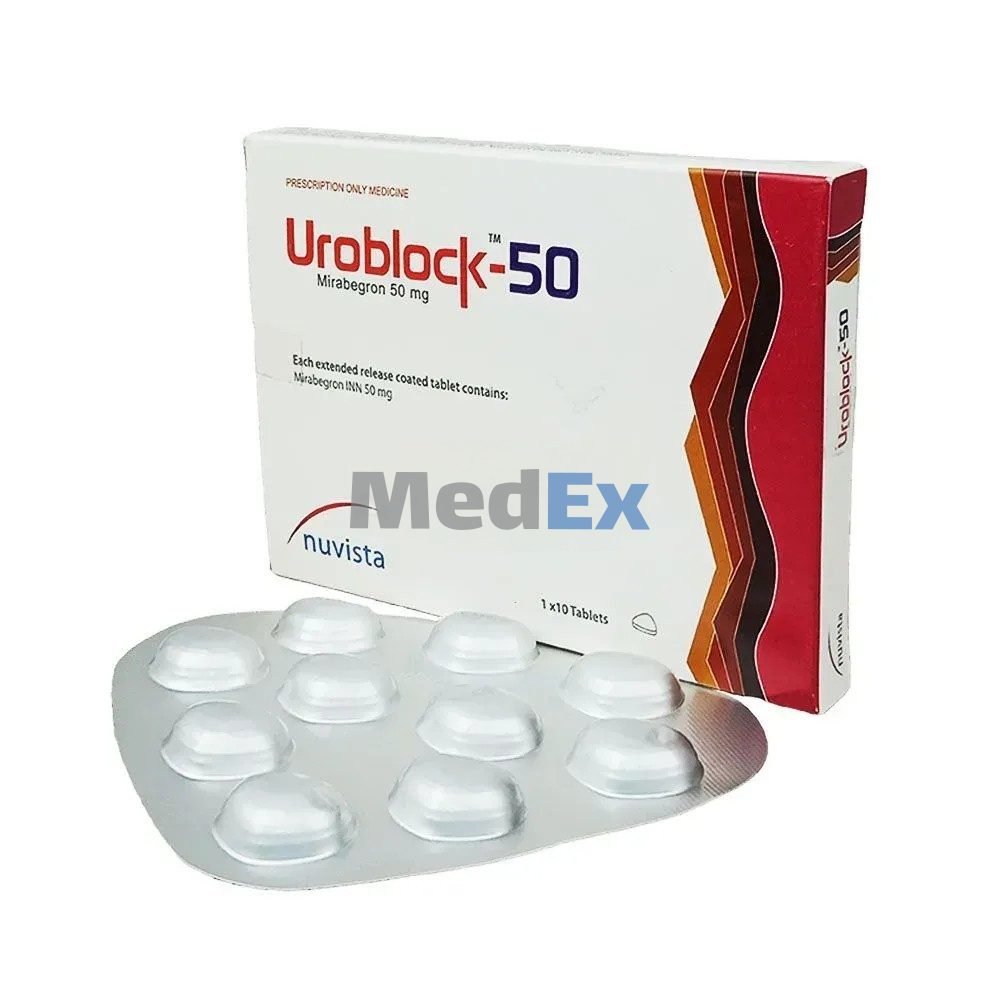
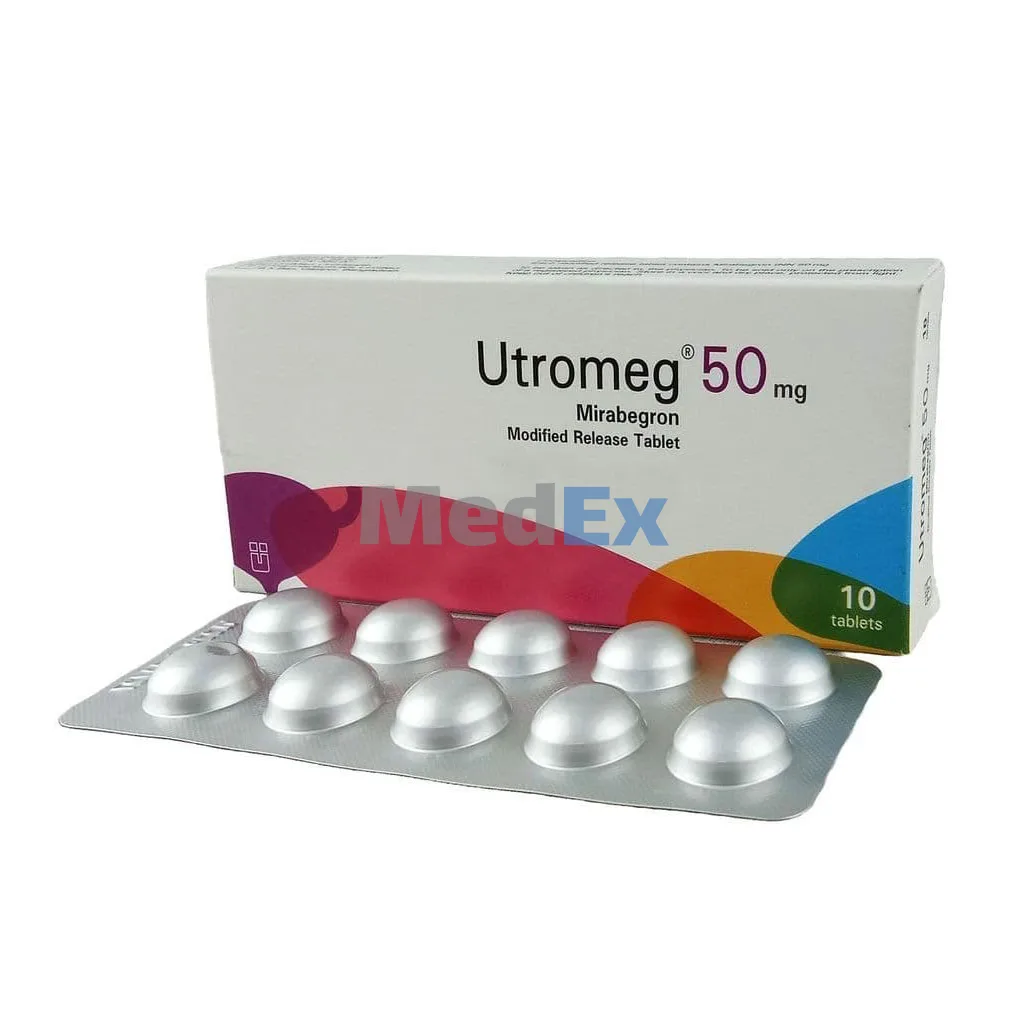
| Active substance | Mirabegron, as listed. Formulation details are not stated in the product listing.[4] | Mirabegron[1] |
|---|
| Brand name | Each manufacturer's own brand name (13 products listed, for example Mirabeg, Mirasol XR, Uroben XR)[4] | Myrbetriq (US) / Betmiga (EU)[1][3] |
|---|
| Company | 13 manufacturers, for example General Pharmaceuticals, Beximco, Incepta, Square; manufacturing country listed: Bangladesh[4] | Astellas[1][3] |
|---|
| Dosage form | Extended-release tablet (one brand: prolonged-release tablet), as listed[4] | Extended-release tablets or extended-release granules for oral suspension (US label)[1] |
|---|
| Strength | 25 mg and/or 50 mg, as listed[4] | Tablets 25 mg and 50 mg (US label)[1] |
|---|
| Pack | Not stated in the listing (for Mirabeg: 20 or 30 tablets in a strip)[4] | Not listed by Medicine for World[4] |
|---|
| Regulatory approval | Varies by product and country. Not independently verified for this page; check with your national medicines authority. | US FDA approval 28 June 2012 · EU authorisation 20 December 2012[2][3] |
|---|
| Classification | Product represented by its manufacturer or supplier as containing mirabegron. Regulatory classification must be confirmed in the relevant jurisdiction.[4] | Originator product[1][2] |
|---|
| What must be the same | Same active ingredient, strength, dosage form and route of administration as the originator, where the product is approved as a generic[5] | Reference product[1] |
|---|
| Bioequivalence | Must deliver the same amount of active ingredient at the same rate and extent as the originator[5][6] | Reference product for the comparison[6] |
|---|
| Clinical trial data | Does not have to repeat the originator's animal and clinical studies; shows equivalence to the originator instead[5][6] | Full safety and efficacy programme submitted for approval[2][6] |
|---|
| Inactive ingredients and appearance | May differ (for example colour or excipients); minor differences are generally allowed and rarely matter clinically[6] | Its own formulation and appearance[1] |
|---|
| Manufacturing standards | Made under the same strict good-manufacturing-practice standards as the originator; plants are inspected[5] | Same standards[5] |
|---|
| Price | Tends to cost less, because the maker does not repeat the original studies[5]. No prices are shown on this page. | Usually higher[5] |
|---|
| Market entry | Generally approved once the originator's patents and exclusivities have expired or been successfully challenged[5] | Protected by patents and marketing exclusivity during that period[5] |
|---|